Lesser-Known Wildlife of Satpura National Park
Satpura National Park is the most tranquil and beautiful wildlife sanctuary of India. It lies in Madhya Pradesh and is a constituent of the Satpura Tiger Reserve. Many people think of Satpura as just for tigers, but the park offers much more than just big cats.
Satpura also harbors a number of rare and little-known mammals, birds, reptiles, insects and plants. Some of these are rarely or never seen in other national parks. This hails Satpura as a landmark in the hearts of people who are fond of nature and wild. The sanctuary is also renowned for its serene environment and absence of crowd- which the wild doesn't mind at all.
So from dense jungle to rocky hills, from rivers to grassy fields, you can find all manners of natural habitat in Satpura. These environments support a plethora of living things. That is why Satpura ranks among the best wildlife region in central India.
Why Satpura National Park Is a Biodiversity Hotspot
Satpura National Park is known for its rich diversity of species. Biodiversity refers to the number of different species of plants and animals in an area. The park is situated in the Central Indian Highlands, a biologically significant ecological zone of India.
Satpura’s terrain is ranging from sal forests, bamboo forests, steep gorges to open meadows, rivers, and rocky hills. Each of these terrains has a distinct wildlife. Forest-dwelling animals live in one region, animals of the open country dwell in another.
One of the biggest reasons for the incredible biodiversity of Satpura is the minimal human interference. Satpura is less visited in comparison with other well-known tiger reserves. This allows animals more room and tranquility. Rare and elusive species are safer and more active here.
The park also has a good food web. Herbivores, such as deer, graze on plants. Carnivores, such as wolves and leopards, prey on herbivores. This balance is part of what keeps the forest healthy and strong.
Lesser-Known Mammals of Satpura National Park
Indian Giant Squirrel
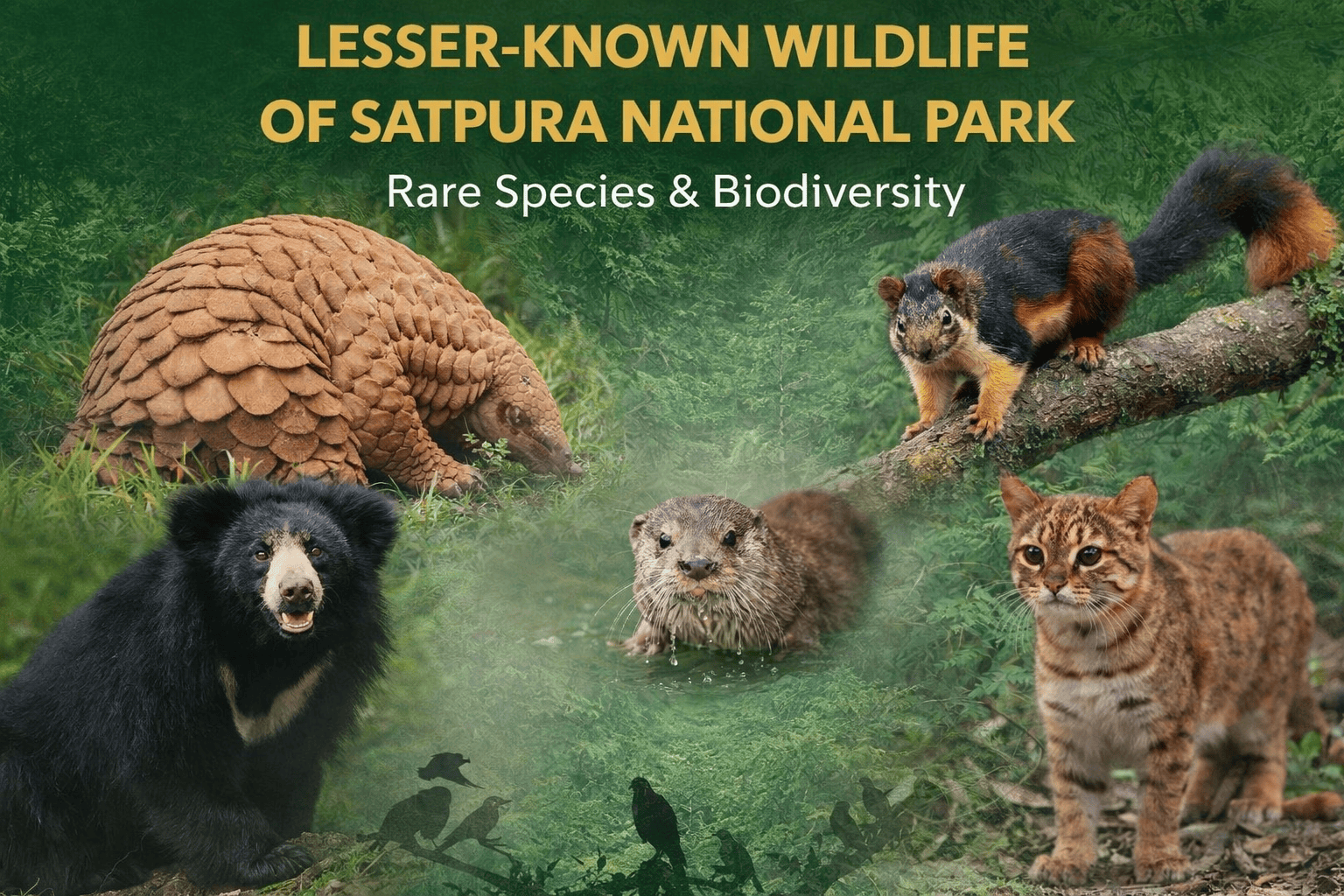
The Indian Giant Squirrel is how wonderful the question with Satpura National Park spices could be answered, if we speak about colorful animals. It is significantly larger than the tree squirrels of its common neighbor and features a long and full tail. Its silky fur displays many shades brown, black, orange, and cream colors.
This squirrel lives high up in tall trees, and seldom descends to the ground. It eats fruit, seeds, leaves and bark. The Indian Giant Squirrel makes large nests out of twigs and leaves. Despite its large size, it is incredibly shy and dashes for cover at the first sign of danger.
Indian Pangolin
The Indian Pangolin also is one of the rare animals of Satpura National Park Trip. Its body is armored with tough scales, made of keratin, that shield it from attackers. The pangolin balls up when it feels threatened.
They eat mainly ants and termites, pangolins. They use their glistening long sticky tongues to catch insects. These creatures are nocturnal, so are active at night most of the times. They reside in underground habitats; caracals hide within burrows during daytime.
Unfortunately, pangolins are at risk because of illegal hunting and trade in wildlife commercial.
Sloth Bear
Sloth Bears are quite common in Satpura but very little is known about them by the visitors . These bears have shaggy, black fur and a light-colored patch on their chest. They have powerful claws with which they excavate for termites and ants.
Sloth Bears consume fruits, flowers and honey too. They are generally most active in the early morning and in the late evening. Despite their slow appearance, sloth bears are capable of running at high speeds when they need to.
Rusty-Spotted Cat
The Rusty-spotted Cat is one of the tiniest wild cats on Earth. It is extremely elusive and slow to spot. This cat bears a reddish-brown fur with tiny dark spots.
It is found in thick forests and hills. The Rusty-Spotted Cat preys on small birds, rodents, insects and reptiles. It is nocturnal, and it hides during the day in trees or shrubs.
Indian Wolf
The Indian Wolf is an intelligent and vigilant creature that inhabits the wastelands and open forest areas of Satpura. Wolves live and hunt in packs. They use sound, visual cues and scent marks to communicate.
The Indian wolf preys on deer and wild boar. They are vital in controlling the population of prey. It plays a part in maintaining the balance of the forest.
Smooth-Coated Otter
Smooth-coated otters are found along rivers and water bodies within Satpura National Park. They have slick, glossy coats of fur and webbed toes to help them swim.
Otters mainly eat fish and crabs. They are playful and we’ve met them sliding down into the water, and playing with one another. The water system of Satpura to have them them means it is clean and healthy.
Rare and Endemic Bird Species of Satpura
Satpura National Park is a haven for bird watchers. More than 300 species of birds have been sighted here. Birds inhabit forests, rivers, and open grasslands.
- One of the most spectacular birds that occurs here is the Malabar Pied Hornbill. It has a strong yellow beak and powerful wings.
- The Indian Paradise Flycatcher (family Terpsiphone) is distinctive for its long tail and elegant flight.
- You can also spot the Crested Serpent Eagle perched on a tree branch hunting for prey.
- The bright and colourful Indian Pitta is a delight to spot for birdwatchers.
- Satpura is home both to resident as well as migrant birds who come here in droves for the protection and bountiful cuisine.
Reptiles, Amphibians, and Nocturnal Wildlife
Satpura also boasts a number of reptiles and amphibians. The Mugger Crocodilea lives in rivers and lakes. It rests on riverbanks during day frequently.
The Indian Rock Python and Monitor Lizard also exists in the jungle. These reptiles contribute to the control of the rodent population.
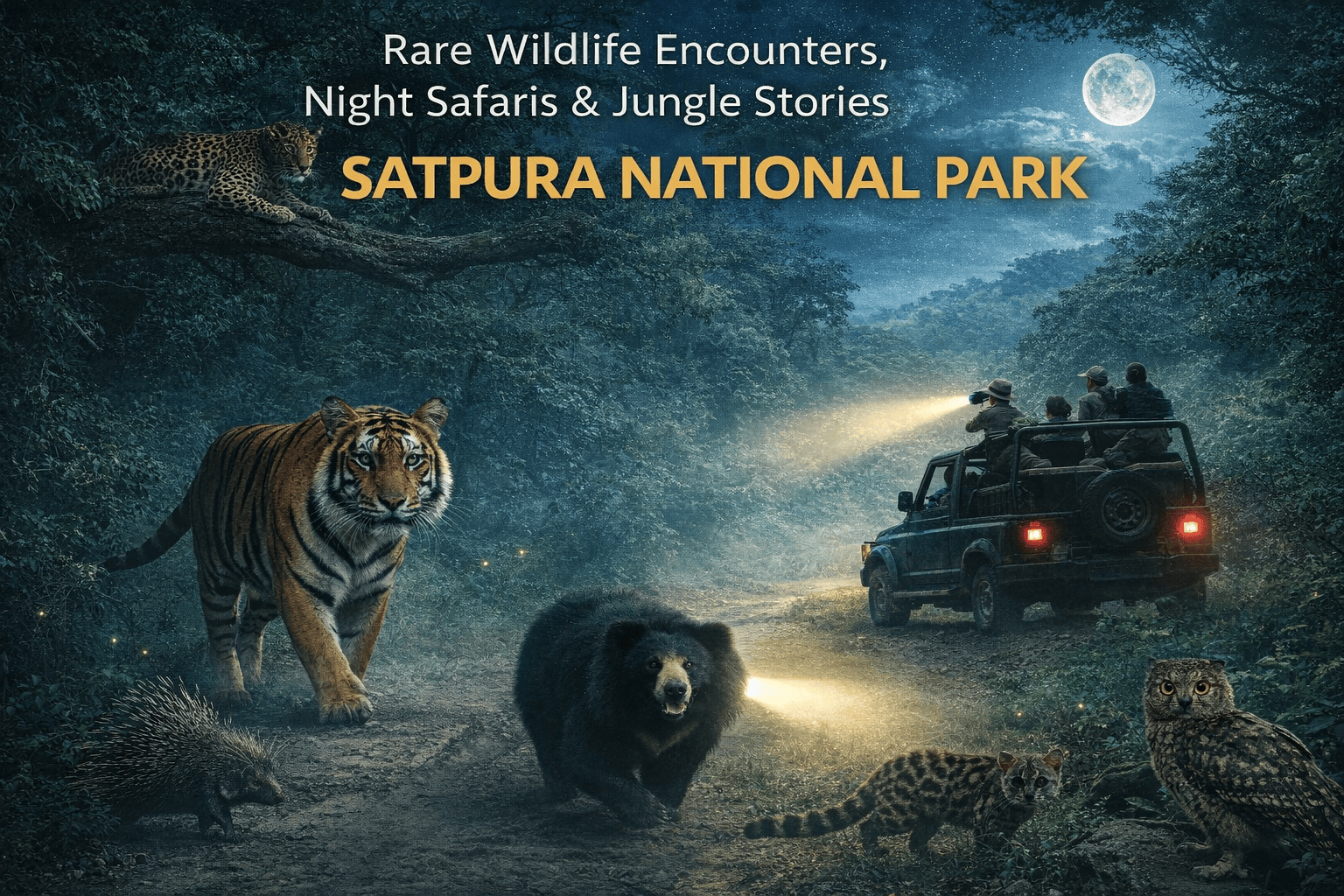
At night, Satpura gets into motion with nocturnal creatures. Civets, porcupines, owls, bats, and frogs can be seen as night falls. At monsoon, we find huge variations of frogs and toads, predominantly of course, close to water, really close to water bodies. They are more important than you think in controlling insects.
Unique Flora Supporting Satpura’s Wildlife
The flora of Satpura National Park is richly varied. Sal trees cover the bigger part of the forest. Many animals live in and eat from bamboo forests.
Teak, mahua, tendu and medicinal plants grow here too. Several tribal groups are reliant on these plants for traditional medicines.
Satpura’s plants keep the soil in good condition, help store water and give us oxygen. They also provide fruits, leaves and shade for the animals. No wildlife can survive, without healthy forests.
Best Safari Experiences to Spot Rare Wildlife
Satpura National Park windows many most unparalleled safari in the India. The jeeps make the visit more enriching as one can make excursions deep into the forest to sight mammals such as bears, deer, and the elusive wild dog.
Walking safaris are the hallmark of Satpura. Visitors can hike the woods with experienced guides, who show them how to identify animal tracks, along with pointing out plants and insects.
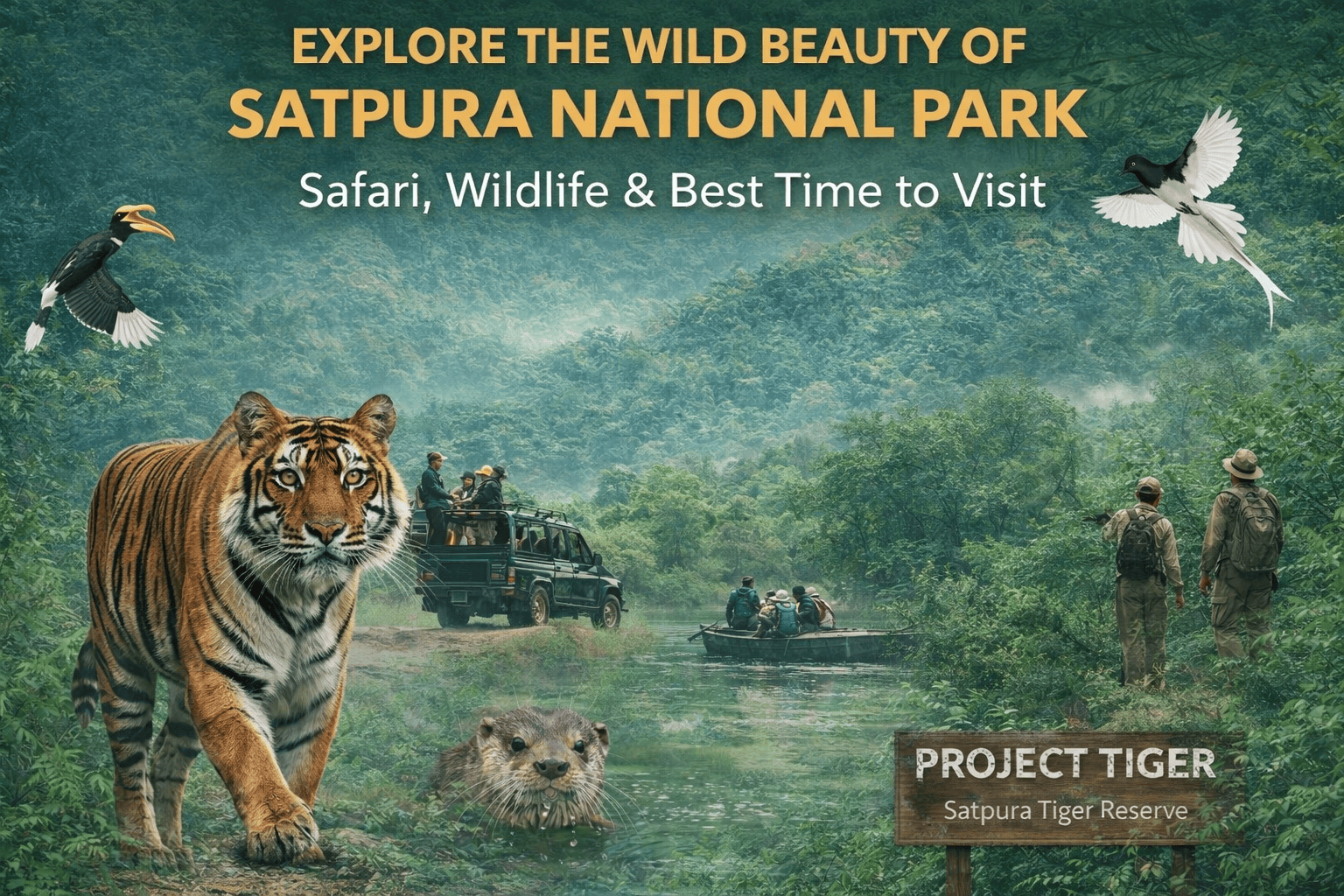
Denwa River boat and canoe safaris provide tranquil wildlife viewing. These safaris are ideal to see otters, crocs and waterbirds. They are less disturbing for the animals, because these safaris are silent.
Conservation Importance of Satpura’s Lesser-Known Species
The less familiar animals of the Satpura are also vital for the forest system. Every species has a part to play in keeping the scales balanced. The loss of one species has ramifications for many.
Wildlife can be at risk from such threats as habitat loss, climate change or poaching. The animals of Satpura National Park are protected through conservation measures and forest management.
Conservation is part of responsible tourism too. When tourists treat nature with respect, they not only hold up the barriers that protect the forest, but also raise awareness around issues of wildlife conservation.
Conclusion: Why Satpura Is Truly Special
Satpura National Park is a hidden gem in the wilderness of India. It is not a tiger reserve alone, it is a sanctuary for a host of rare and little known species. From small wild cats and brightly colored birds to old-growth forests and rivers, Satpura offers a full palette of nature’s wonders.
If you really seek a calm, rich and elevating wildlife experience, Satpura National Park should be on your bucket list. Conserving that forest is conserving the future of many distinctive species.