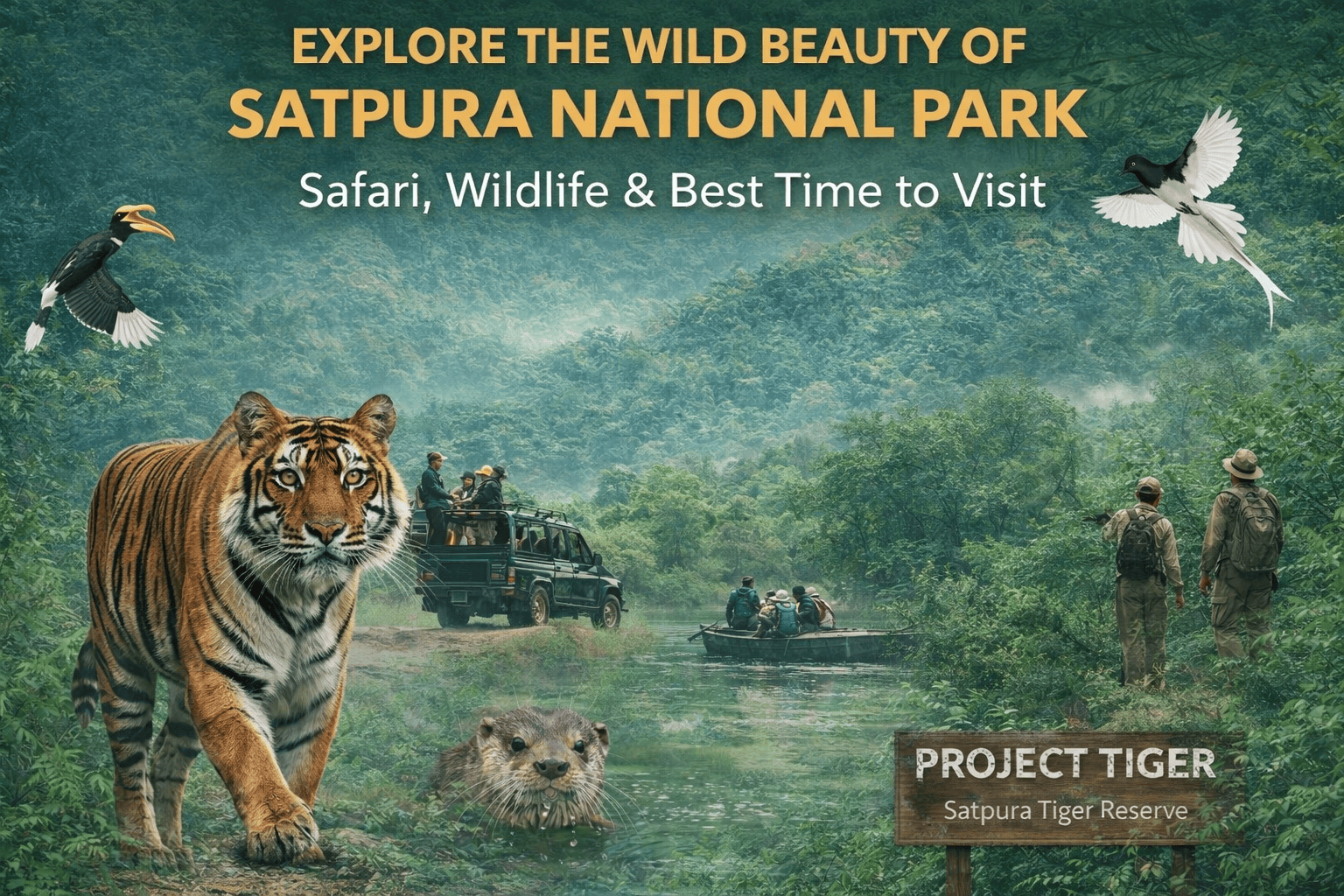
Explore the Wild Beauty of Satpura National Park
Satpura National Park is among the most dazzling and serene parks of wild animals in India. It is situated in the Indian state of Madhya Pradesh and it makes the Satpura Tiger Reserve. Here there is no jostling and turmoil on parade day at roll-call as you see in these parks for tourists. It is a natural jungle like Satpura, a treat to a silence that is rare in crowded parks such as these.
This is India`s land of dense forests, rugged hills, rivers and varied wildlife. So it would be a dream come true for people who love outdoors, wildlife and adventure. Satpura isn't just for tigers. There are so many animals, birds, reptiles and plants that make the forest so alive.
Visit Satpura National Park to witness the nature in its real form. From early morning mist to golden sunsets, everything feels special at this place.
A Quick Overview of Satpura National Park
The Satpura National Park is located in Hoshangabad district of Madhya Pradesh. The park is located in the Satpura hills which accounts for its distinctive landscape.
Satpura is a very different terrain compared to the flat grassy plains parks. It contains hills, valleys, rivers and thick forests of sandstone rocks. Along the park flows the Denwa River, adding to the scenic beauty of the park.
Thus, for terrain features, animals and birds of many kinds found here a home.
The Biodiversity Being Enriched by Satpura
It is reputed to be one of the least disturbed forests in Satpura National Park KNH today and its excellent biodiversity. The forest shelters tigers, leopards, sloth bears, wild dogs, Indian bison (or gaur), deer, and a vast array of small animals.
The park is also renowned for its birds. Over 300 bird species have been sighted in this park. There are also plentiful reptiles, amphibians, butterflies and insects.
This wealth of species throughout makes Satpura one of the finest wildlife parks in the whole of India.
Best Time to Visit Satpura National Park
- Peak Time
Satpura National Park is covered with lush green vegetation in monsoon but stays closed for visitors in the rainy season. The climate is perfect for a safari in these months. Animals are active; forest is green/ fresh. The cold winter mornings are worthwhile, with magnificent views and exceptional wildlife.
- Summer Season
Temperatures during this season can get quite hot and you’ll want to be extra cautious with the animals In and Near Water during this time. As the water supplies dwindle, the animals come to drink, so your chance of sightings will be greater.
- Monsoon Season
The park is closed for the monsoon season typically from July through September. Forest trails are rendered unsafe by heavy rain. But the monsoon season makes the forest grows healthy and green again.
Safari Experiences in Satpura National Park
Jeep Safari
Jeep safari is the best way to see Satpura National Park. These safaris bring tourists right into the jungle with trained guides and drivers.
These sightings include tiger, leopard, bear, deer and numerous species of birds. They are also full of interesting tidbits about animal behavior and the life of the forest.
Walking Safari
Satpura is one of the very few Indian national parks where walking safaris are permitted. Your forest trek will be guided, so you can walk through the forest on foot.
Walking safaris allow a more close-up understanding of the forest. You also learn about animal tracks, plants, insects, and bird calls. It is a thrilling and educational experience.
Boat and Canoe Safaris
Boat and canoe safaris on the Denwa River are one of the Satpura exclusives. These safaris are tranquil and quiet, as nature is undisturbed by noise.
While on a boat safari, crocodiles resting on riverbanks, otters at play in the water and water birds flitting overhead can all be observed. It is the best way to soak in the tranquility of Satpura.
Zones of Satpura National Park
Core Zones
The core areas are the main conservation blocks in Satpura National Park. These regions were bountiful with wildlife and natural splendor. Madhai is considered to be one of the most sought after core areas. There are excellent animal viewing possibilities and the forest and river can be viewed from here.
Buffer Zones
Surrounding the core areas are buffer zones. These areas are less touristy and provide a more serene safari. Parsapani and Jamani Devi are buffer zones. People with passion for nature, who wish to relax in natural surroundings, these are the places to be.
Wildlife You Can Expect to See
Mammals of Satpura
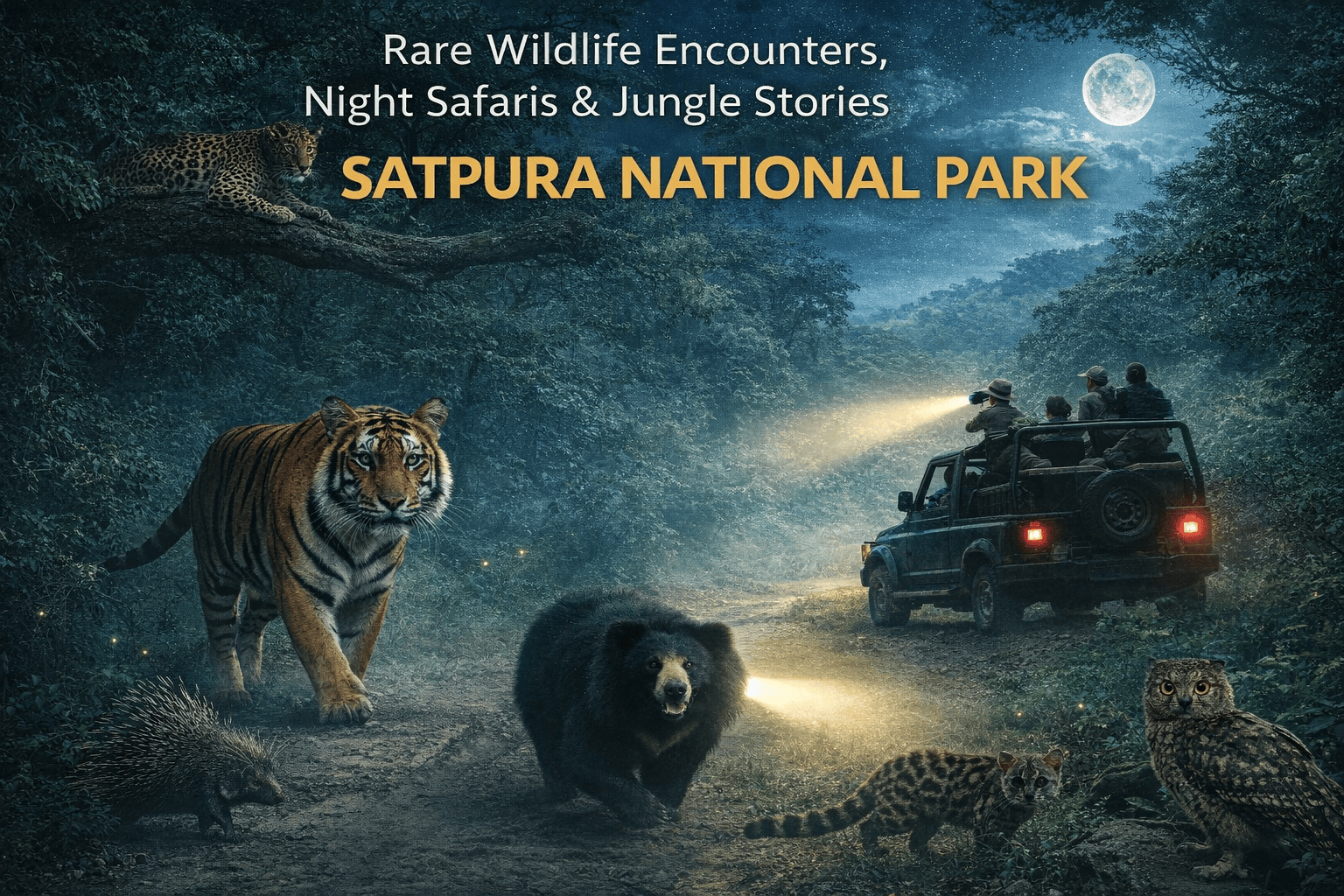
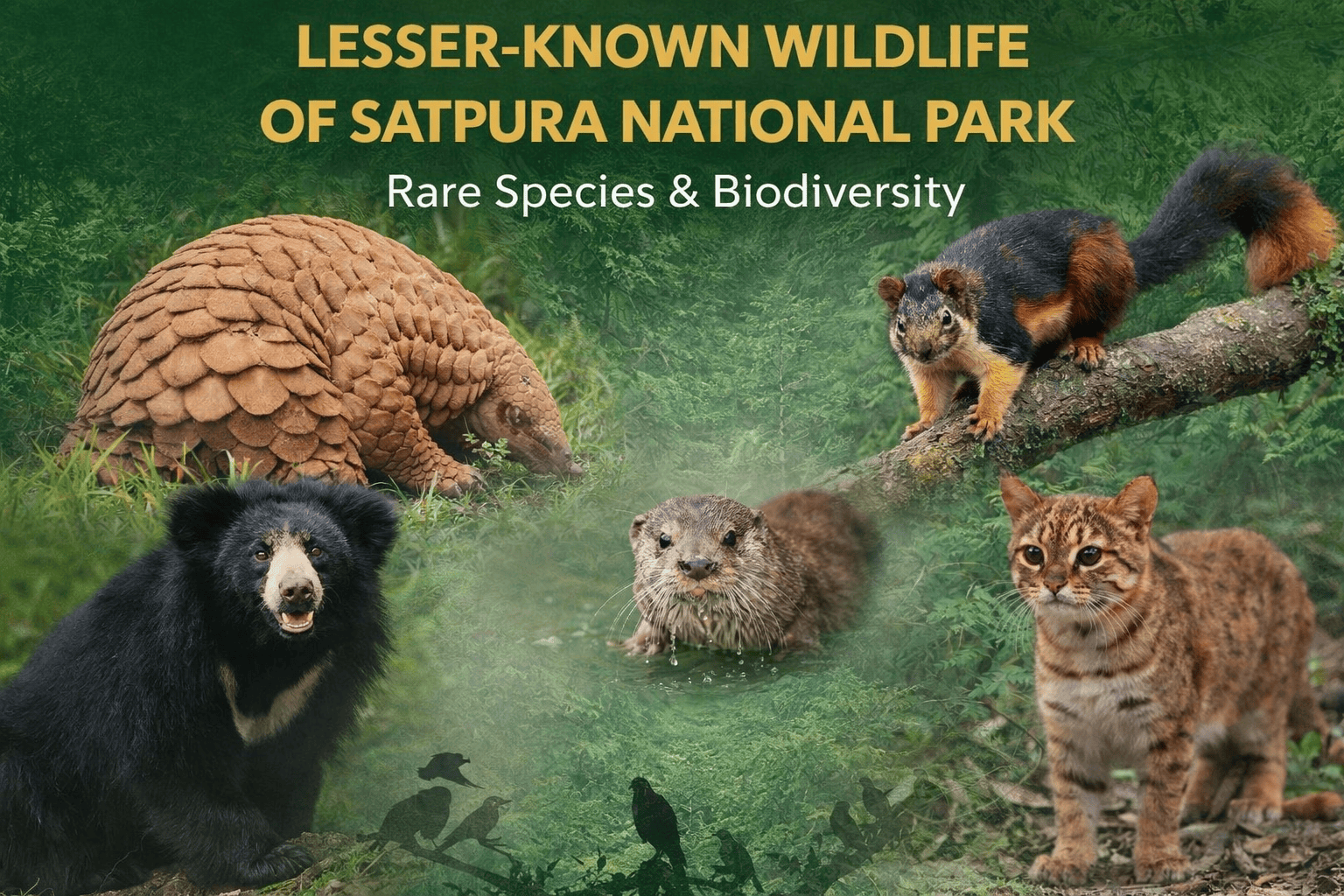
Many mammals are found in Satpura National Park. Tigers and leopards are the main predators here. Sloth bears are frequently encountered, particularly when you are on safari in the early mornings or late evenings. Wild dogs, Indian bison (gaur), sambar deer, chital and barking deer are also residents. Even smaller creatures such as foxes, jackals and jungle cats contribute to the multiplicity.
Birdlife of Satpura
Birdwatchers will dream of Satpura. Indian Paradise Flycatcher, Malabar Pied Hornbill, many kingfishers, eagles, owls and so much more beautiful colourful birds. The combination of forests, rivers and open ground make an ideal habitat for birds.
Reptiles And More
The park is home to reptiles including the muggers, monitor lizards and snakes. Frogs, butterflies and other insects are vital to the forest community.
Scenic Beauty and Natural Attractions
Satpura National Park is more than just animals. The landscapes in the park are just as breathtaking. Tall trees, sheer rockfaces, meandering rivers and sweeping plains make for breathtaking panoramas.
The magic moments of sunrise and sunset safaris. The sun streaming through the trees and the fog rising up off the ground makes for some memorable images.
Safari Booking and Permits
Permission for Satpura safaris must be obtained. These may be arranged via the Internet or through travel agents.
Safaris should be booked well in advance, especially in high season. Permits cover park entry fees, guide fees, and vehicle fees.
Conclusion: Experience the True Wild Beauty of Satpura
Satpura National Park is an ideal place to bring nature lovers who want to experience the outdoors in a relaxed and natural style. The forest, wildlife and safari options make this park unique compared to other national parks.
Whether you’re a nature enthusiast, a shutterbug, an adrenaline junkie, or someone seeking calm, Satpura has a special experience for all. Traveling to Satpura is more than a holiday, it is a voyage into the centre of nature.